Monday, February 1, 2021

HAZOP of a Metal Powder Production Plant – Rhetorical Questions


Hi everyone, I would like to share some engineering questions and notes, I made during a HAZOP (Hazard Operability) safety study for a vacuum furnace process producing fine metal powder.

The melting and spray drying of metal blocks into fine powder (extremely explosible!) is undertaken in a vacuum furnace vessel. The process includes furnace tipping of melted metal blocks, spray drying with a gas, solid separation via a cyclone and dust filter/gas cleaning before it releases to the atmosphere. A new metal feedstock and impure inert gas was considered in the study.

Like my other posts, questions here can be asked for any generic process plants.

Please comment, like and subscribe.

Photograph 1: Generic Metal Production Plant

Vacuum Furnace Operation

1.       Given water is usually circulated in coiled pipe on the furnace body – if a leak were to occur, is there a possibility of steam explosion occurring?

(1)    Condensation – possibly due to a leak in the vessel roof

(2)    Water droplets in presence of rust/coal/soot and molten metal, can lead to an explosion

(3)    Caused by violent boiling or flashing of water into steam


2.       If a wrong feedstock (metal block) is used, Is there any possible consequence of superheating?

(1)    Thermal expansion – may lead to possible rupture and leaks

(2)    Low density material can lead to overfilling – as higher volume for same mass

(3)    Different vapour pressure between boiled vapour of new material – boiling point reduced in mixture – thus over boiling?


3.       For the dust vent filter box – is it possible that it could be incorrectly installed?  

(1)    Could the vent panels or dust collection bin on the filter, not be secured?

(2)    Could you consider installing a dust discharge monitor in the vent stack?

(3)    Do explosion panels need to account for travel back – therefore do they have an explosion isolation system? like a Slam shut valves, deluge/suppression, trouser legs (to push explosion up - I know it’s a funny word actually)

Photograph 2: Generic pipework

 
Oxygen sampling

4.       The spray drying of flammable metal powders, is inerted, based on its limited oxygen concentration (LOC) - to prevent explosive atmosphere. There is an oxygen monitor and alarm with a set point to trip operations - Has this been adjusted for operating temperature and pressure of the furnace?

(1)    Has a safety margin been applied to the set point of the oxygen O2 alarm?

(2)    Typically, the LOC is reduced by 17% reduced per 100°C up to 200°C, then 12% reduced per 100°C afterwards

(3)    Include an extra 2% points extra margin for delay in reading! This is concentration NOT percentage of an LOC (very important!!!)


5.       Has the complexity of temperature been accounted for the monitoring of oxygen level in the furnace? Has a profile been developed as the furnace vessel is being cooled?:

(1)    Heated inert gas could be heavier than air, but at temperature could be at point of buoyancy

(2)    It is recommended to record an oxygen monitoring profile for shutdown/cooling

(3)    Can you use a thermal temperature monitor to see inert gas profile?

(4)    BUT convection pattern of hot gas can be inert mixture – may be cooled thus difficult to tell if air or inert gas present.


6.       How do you check if sample line for an oxygen analyser is blocked? Is there a cycling of multiple channel sample points?

(1)    Could it be drawing from one channel and others are blocked?

(2)    Calibration not enough to fix sample line problems!

(3)    Can you use secondary handheld meters (2nd layer)

(4)    Can you reverse the flow of sample line to unblock line (purge)?

(5)    Is there a redundancy present (spare?)

(6)    Is there motive force (pressure) or a pump needed?

(7)    Is there a place to return the sample? E.g. vent stack or flare, if hazardous


Inert Gas Supply / Storage


7.       Are there any cold surfaces in supply line for gas to expand? – may cause injury to person by freeze burning


8.       Is the inert gas dry? – thus potential for condensation & blockages in supply line to vessel


9.       Is there potential for air ingress into the gas supply line or in the vapour space of the storage tank - when supply level is low?

(1)    Is there a monitor of oxygen gas to check quality of inert gas quality.

(2)    Has a walk the supply pipework been undertaken as per its P&ID?

(3)    Safeguard may be that air is expected to be above the liquid CO2 surface (as CO2 is heavier)

(4)    Get vendor to do a hard change over & written confirmation of the inert gas sample

(5)    Partial pressures – if CO2 or O2 which will boil off first? – therefore is there a limit switch when the supply storage tank empties?
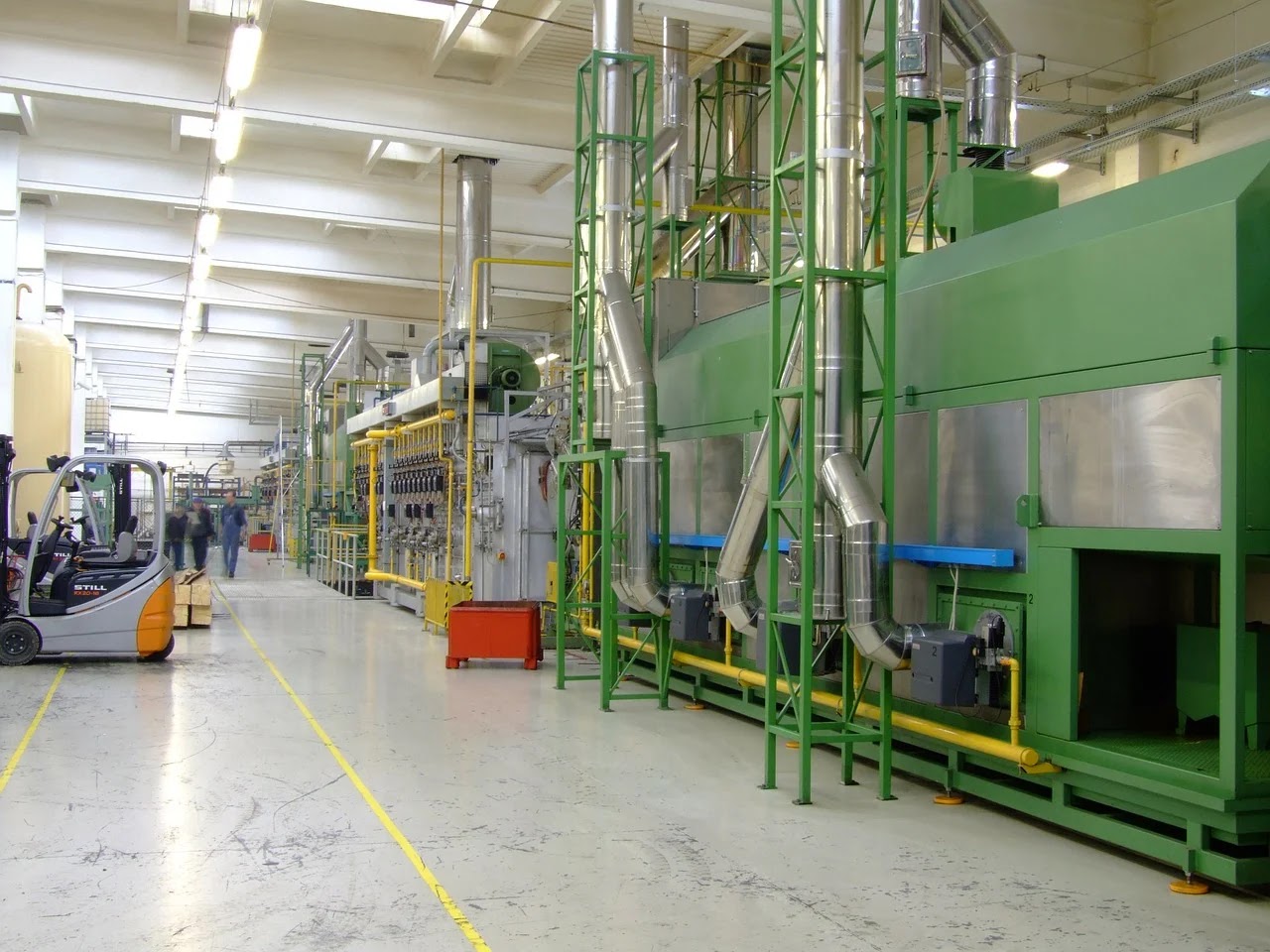
Photograph 3: Generic Factory Floor

General / Maintenance:

10.   What if there is a power failure of a hydraulic crane unit used in tipping the furnace into the spray dryer?

(1)    Does it lock in position upon failure? (continuous strain)

(2)    Does it return to default position in slow mode (or nearest point?)

(3)    Hydraulic system will need something to relief pressure for it to stop dead

(4)    What is the fail-safe position of the hydraulic/electrically powered crane?


11.   Hydraulic oil hoses used in the mechanical systems, what are the quality checks, change policy and service life?

(1)    Are replacements like for like or better hose service duty

(2)    Can additives be used to prolong life of such hoses?

(3)    Is there a potential for fire in area and injury to person?

(4)    If left unchecked too long – may crack and degrade


12.   Are solvents used to clean the vacuum furnace vessel?

(1)    What respirator kits are used? Disposable? Tyvek (paper suit)?

(2)    Can water be used for cleaning? Deionised v distilled water (pure water)

(3)    Mixed bed resin is used for deionised (pass through)

(4)    Ensure ions have been removed – thus relatively fast process

(5)    But needs regeneration of resins that may degrade over time

(6)    Distillation – removal of contaminants but longer process

(7)    Consider waste water collection in bund area & disposal (HSE)

(8)    BUT water too cohesive – thus effects vacuuming process


Thank you for reading, please comment, like and subscribe to this blog

Hope you have enjoyed reading this

Chiraq


#Hazop #Safety #IChemE #PHA

Saturday, January 16, 2021

Safety - HAZOP of a Thermal Waste Treatment Plant – Rhetorical Questions

Hi everyone, I would like to share some engineering questions and notes, I made during a HAZOP (Hazard Operability) safety study for a thermal waste treatment plant.

This plant consists of a series of screw conveyors (augers), burner units, gas cleaning, condensing towers and  waste oil tanks. Like my other posts, these questions can be applied to any generic process plants and I hope it can be of some benefit to the readers.

Figure 1: Generic Storage Silos in a Waste to Energy Plant 


Screw conveyors

1.       For the flexible bellow expansion joints present on the conveyors, it can fail due to excess heating/cooling

(1)    Is the life expectancy of such joints/bellows known?

(2)    Is there a suitable replacement/inspection regime created? Ensure to hold essential stock for replacement.

(3)    Are the seals rated for the correct duty, design temperature, and chemicals handled in the process?

2.       For the over-pressuring of a screw conveyor (Auger) – A shear pin is usually present on the motor body, which indicates if the screw is blocked

(1)    Is there any safeguard before shear pin is activated?

(2)    Should there be alarms, differential pressure indicator, shut off trip, etc?

(3)    It should be noted that the closure of discharge valves (outlet of screw) is not recommended, as it is better to close the inlet and leave outlet open

3.       Is it possible that one of screw (auger) will be maintained when the other is in use? Can back flow of gas occur (from the burner unit)? Is there adequate protection for persons working on the system?

Burner unit

4.       For the purging of a burner unit with inert gas (Nitrogen):

(1)    Is there a written and verified procedure for the purging process?

(2)    Is there 2 independent means of verifying that an inert atmosphere is present within the burner chamber? – as purging of a burner is not simply by pressing a button alone

(3)    Has a nitrogen demand balance been undertaken to ensure there is sufficient nitrogen at peak flow?

(4)    For an increase in feedstock into the burner (screw conveyor malfunction/overpressure) this would lead to an increase in temperature - Will there be a delay in nitrogen purging in shutdown? Ideally this should be immediate.

(5)    Backflow of gas into burner/screw – Can a Pressure Safety Valve (PSV) on the purge nitrogen inlet line, with a low set pressure, stop nitrogen back flowing into upstream screw conveyor?

5.       Is it possible for the upstream auger screw to fail in such a way that fuel gas would bypass from inlet to outlet without going along its desired path? (possible leakages)

6.       High temperature discharge from the burner unit - has consideration been given for a jacketed water cooling system for the outlet discharge conveyor?

7.       For the Combustion air fan

(1)    Is it a direct drive fan? Can it overspeed? If there is a spare fan used, if so, could it be of a different specification?

(2)    Does the fan have a 3 phase fan motor, and could the wires be installed incorrectly? i.e. two phases swapped, thus the fan would run in reverse flow – therefore check this upon commissioning

Figure 2: Generic Air Cooler Fans at a Facility

Heat Exchangers / Gas Quench Towers

8.       Is it possible for the circulation cooling water to leak into the oil circulation system?

(1)    Are the tanks, equipment and towers capable withstanding the extra pressure of cooling water into the system? It should be noted that if a PSV is seeing higher pressure, that does not make a system safe (oil/water mixture)

(2)    It should be noted that the Aims of a safety system…

·       Know as soon as possible that a leak has occurred

·       Ensure that if worst did happen – there is a sufficient safety control to prevent failure of vessel (over pressurisation)

·       There should be alarm to show loss of control, thus automated action, before safety valve is used

(3)    Reliability – should there be additional static water supply available for the cooling system?

9.       Level monitoring of the quench towers:

(1)    Are there two independent layers for level alarms and trips? i.e. One indicator should NOT have a ‘high’ and ‘high high’ alarm on it, as it should be independent (reliable).

(2)    Are switches, alarms and trips a different type so that ‘common mode failure’ does not apply? I.e. Level alarm low (LAL), or low low (LALL), etc.

(3)    Given that a sight glass shows liquid is flowing out and doesn’t say how much is in the tank, if a sight glass is not inspected – then can a high level in the quench tower/tank build up over time?

(4)    Could an overflow trap be fitted at the nozzle into the quench tower? i.e. a dip leg / u shape pipe

General

10.   Are lines insulated with non-porous insulation and or is there a procedure / permit for the removal of insulation?

11.   Draining system / waste oil tank

(1)    If oil is to be drained and system is under negative pressure, will air bubble in though the oil as it comes out due to gravity?

(2)    Is there positive isolation for drainage system? i.e. typically a double valve or valve and blind setup, and this would be needed for vents too

(3)    Is the whole site of the waste oil tank bunded for fire water/deluge use? What about the catchment pit? Is the recovery of all the deluge water important?

(4)    Blind flange – is there a safe system of removal of the blind?

12.   Heat tracing - Is it in series? If so a failure at any point would show as a failure of the system, BUT how is the location of the failure diagnosed as it could be anywhere? It should be noted that pumps are not usually heat traced, due to problem of removing them for maintenance

Thank you for reading, please comment, like and subscribe to this blog

Hope you have enjoyed reading this

Chiraq


Saturday, December 26, 2020

Safety - HAZOP Study Toxic Storage Tank - Rhetorical Questions...

Hi everyone, I would like to share some questions/notes, I made during a HAZOP (Hazard Operability) safety study for a 25 tonne storage tank and its distribution system, handling toxic materials at a facility.

Generic Chemical Storage Tank

Questions:

General System:

1.       Is a direct liquid feeding system safer than one with multiple smaller day tanks?

·       Safer for direct feeding as there is less instruments, leak paths & point of failures

·       BUT not good for production as day tanks provide buffer if a transfer pump shuts down

·       Direct feeds may have higher flowrates (unsafer if it leaks) – thus day tanks are preferred

2.       Is there any use of different material of construction, valves, seats or seals out of specifications in the distribution system? - This can be a source of leakages and fugitive emissions 

3.       Is there a common vent line shared between the multiple day storage tanks? Are these tanks sealed for overflow of liquid into the vapour line?

·       Vent lines equalises pressures & allow for expansion of vapours

·       A failure of overfilling liquid in one tank may trigger level alarms in all the day storage tanks - when it could be instrument fault or human error in one tank, Thus difficult to troubleshoot

4.       Are there any safeguards for improper connections of vapour return line onto tanker? i.e. CCTV, 2nd signature checklist, labelling, etc.

Equipment:

5.       Is there an issue for pumping air into the tank? Will this effect quality of the chemical storage & used in the facility?

6.       Can the transfer pump can run dry? As magnets can burn out, overheat and be damaged. Wil the operator have to break into line? Can a seal-less pump be used instead? As it is self-priming, thus prevents restarts

7.       Can a spill back line (return) for the pump be used to mix with potentially frozen fluids?

8.       What is the procedure for changing the filters of the pump? Is there decontamination process? Is splashing a possibility? How is releases to drain or ground water prevented?

9.       For the gas scrubber/extractor – Is the activated carbon the right grade/type? Can a sign be put up to inform operators? Scrubbers usually catch fire with ketones – thus confirm suitability with toxic material

10.   Is there a possibility for obstruction in the exhaust outlet of an extraction fan? i.e. a birds nest.

Safety Systems

11.   Can the tanks relief valves/Burst discs be installed incorrectly backwards?

12.   Is foaming or bubbling a possibility in the burst disc? Check ullage/head space of tank for foaming allowance

13.   Does temperature effect the operation of the tank relief valve and does the room need temperature control?

·       Higher temperatures, thus vapour generation & more vapour flow through relief valve

·       Low temperatures, more crystallisation & solidifying may take place

·       Consider using adhesive surface temperature indicator, which changes colour (typically used in a fish tank)

14.   What is the sizing basis for the vacuum relief valves? Is there any potential for chemical reactions that remove gases from head space of the tank?

·       Due to corrosion of interior of a steel vessel

·       Newly cleaned steel with chemicals can remove oxygen

·       E.g. Ammonia reacting with chlorine to form ammonia chloride

15.   Is there potential for blockages in the tank and distribution system?

·       Material can polymerise, crystallise, condense or solidify

·       Monomers can escape a tank free of inhibitors

·       Waxes & viscous high boiling point materials can solidify

·       Dust accumulation

·       Water vapours can condense to form liquid seals in low points or freeze in winter!

·       Is there any

16.   How are leaks controlled in flanges of transfer pipework? Can you put portable sniffers into flange guards to detect leaks, rather than detecting in the local air/atmosphere

·       Can you use shrink wrap around flanges too, BUT may not be compatible – may melt if leaks

·       Still needs to remove containment toxic materials from flange guard (secondary) as also may lead to release

·       Can you plot a table to justify hiring one person for inspections/plant walk throughs – account for the following variables…

                                                               i.      Size of pipework (diameter in inches NB)

                                                             ii.      Proximity of release area of people

                                                           iii.      Activity in area – where 0 = heavy work and 1 = no work, i.e.. 0.2 = walkthrough

                                                           iv.      Ventilation – where 0 = none, 1 – full, i.e. 0.2 for doors, etc.

                                                             v.      Frequency to exposure

                                                           vi.      Maybe hire someone for 2 months of the year for regular emissions testing


Thank you for reading, please comment, like and subscribe to this blog

Hope you have enjoyed reading this

Chiraq


HAZOP of a Furnace

Hi everyone, I would like to share some notes and questions I made during a HAZOP (Hazard Operability) safety study for a natural gas fire...