Thursday, June 17, 2021

HAZOP of Gas Turbine – Rhetorical Questions

Hi everyone, I would like to share some notes and questions I made during a HAZOP (Hazard Operability) safety study for a gas turbine unit.

The gas turbine has separate systems for the fuel gas & oil, lubrication oil and a turbine washing section that was considered during the study.  

Like my other posts, questions here can be asked for any generic process plants.

Please comment, like and subscribe.

Photograph 1: Generic power plant station

1.      For high temperature feed gas into the burner - Can the blades of the turbine damage due to heat cycling of high temperature?

(1)   Can the blade shed, leading to mechanical sparking downstream, if possible?

(2)   Is there exhaust temperature thermocouple, monitoring, alarm and heat detectors externally?

(3)   Can loss of multiple thermocouples in an inter-stage, fool the control system into thinking a deviation has occurred? E.g. Spurious shutdown


2.      Can the drain valve of the turbine enclosure fail to close upon start up?

(1)   Potential for combustion gases to enter turbine house, cause asphyxiation, hot gases & flammable atmospheres

(2)   Unfiltered air could also be drawn into the turbine enclosure, via open drain

(3)   There will be natural forced air external of enclosure to dilute potential leaks via the drains


3.      Does the flame detection within the turbine enclosure detect both oil and gas fires?

(1)   Is there emergency procedures for an external fire to a fuel oil pump line & tank system?

(2)   Can you install a remote / automatic isolation valve to the gas oil tanks that isolates the tanks during a fire scenario?


4.      Can fuel oil carry over into the feed fuel gas line?

(1)   Oil can enter gas burner – carbonise and potential to block burners & possible loss of power

(2)   Is there a demister (knock out KO :) vessel?


Photograph 2: Generic Fuel gas separator KO vessels

5.      Can the float valve on the gas demister fail open?, thus gas enters the liquid tank & sump

(1)   Is there annual maintenance on the float valve (safeguard)

(2)   Is a review of the drainage arrange of gas demisters needed to prevent it contaminating the drains?

(3)   To prevent gas ingress – is there leak testing prior to start up?


6.      Combustion air inlet - Can the air filter block due to icing? Thus potential carry over of debris into the turbine.


7.      Can vehicles strike and ruptured gas pipes? Is there a vehicle protection systems for gas/oil lines?

Figure 1: Schematic of turbine with lube oil system


8.      Can the waste heat boiler exhaust dampeners fail close?

(1)   This can cause blockages of exhaust – leading to high pressures

(2)   Is there duct pressure monitoring, alarm and trips?

(3)   Could you have mechanical coupling on dampeners to prevent both closing at the same time


9.      Can the diverter valve returning lube oil line into the heat, fail close and heater remain on?

(1)   High temperature can degrade the lubrication properties of the oil and thus cause bearing and turbine damage?

(2)   If lube oil was inadvertently cooled in the cooler - Oil viscosity increases if cooled, and reduces efficiency of the lubrication

(3)   Is there immersion heaters within the lube oil coolers?


10.   Lube oil filling – could the wrong oil be filled? Is the correct oil drum kept nearby on a spill pallet & spill kit?


11.   Can the fuel oil nozzle within the burner fall off? Is it constructed to minimise such failures?


12.   For turbine washing - Can you overheating the wash fluid on cold days, change properties of fluid such that splashing during filling could occur? Thus potential burns to operators


Thank you for reading, please comment, like and subscribe to this blog

Hope you have enjoyed reading this

Chiraq

Saturday, May 8, 2021

COMAH of a Tank farm - Rhetorical Questions

Hi everyone, I would like to share some notes and questions regarding road tanker filling of a tank farm holding flammable liquids.

Some questions were made for the way large tanks are filled from tanker, as part of the Control of Major Accident Hazards (COMAH) Regulations.

Like my other posts, questions here can be asked for any generic process plants.

Please comment, like and subscribe.

Photograph 1: Liquid Storage Tank

Bund in a tank farm:

1.      Can you share the bund of a tanker offloading point with the same one from a tank farm?

(1)   Usually they are linked to a fire pit, that is brick lined

(2)   Where foam is poured inside of it (This is the American approach, not common in the UK)

(3)   Usually need bund and sump (for rain water)

(4)   Are the drains channelled into interceptor tanks?

(5)   Can sloping be used to remove pool under tank? – usual for butane tanks

(6)   Could you direct spills into another area, for burning, where fire engulfment is less?


Tank farm protection:

2.      Are the support legs of the tanks fire protected? – e.g. with Intumescent coating?

(1)   As the coating heats up, it swells, which chars and creates an insulating layer

(2)   This is ok against pool fires, BUT NOT for jet fires, as it blows off the char in

(3)   Usually the legs are over coated, (thin or thick)

(4)   But char on a thin film (structure) is soft & may not be able to handle, 37 kW/m2 of heat

(5)   Note that steel usually has a critical temperature of ~650 to 720°C

Photograph 2: Generic storage tank with pipes


Tanker filling transfer pump system:

3.      Is tanker being filled with own tanker pump or will it use the facility's pump system?

(1)   Usually design transfer system around the tanker

(2)   Tankers can have different pumps and systems – e.g. small or large pumps

(3)   Are the road tanker or tank rated for pressure, maximum of the transfer pump?

(4)   Have maloperations been accounted for? E.g. deadheading of pump?

(5)   Usually tanker have a compressor system with air for transfer rather than pumping.

(6)   Usually in COMAH sites, it is the sites in control of the pump and transferring, rather than the driver, e.g. pump, transfer hose coupling, connections, etc

Figure 1: Road Tanker Zoning (As per HSG176 guidelines)


Preventing tanker movement during filling:

4.      What are the safety systems to prevent tanker filling failures? E.g. tank movement during filling

(1)   Can the ramp (tanker inlet point) be wet? If in a slope for tanker to park on?

(2)   Has ice and snow been accounted for at the tanker filling point?

(3)   Battery powder interlocking to keys and brakes – to prevent movement of tanker

(4)   CCTV, with permanent staff – usually credited in a LOPA study

(5)   HSE guidelines usually has 3 types of tanker filling set ups,

                                          i.     Standard set up with little to no protection

                                         ii.     Mid range – 1 method in which the driver is protected

                                        iii.     Above average – multiple methods to protect tanker filling, e.g. movement detectors protection to trip transfer if road tanker is moved – HOWEVER this gives a lot of false positives

(6)   Types of protection

                                          i.     Wheel protection, to prevent drive away

                                         ii.     Battery interlocks

                                        iii.     Barriers

                                        iv.     Remove keys/cables

                                         v.     Break away couplings

                                        vi.     Automated trip valves


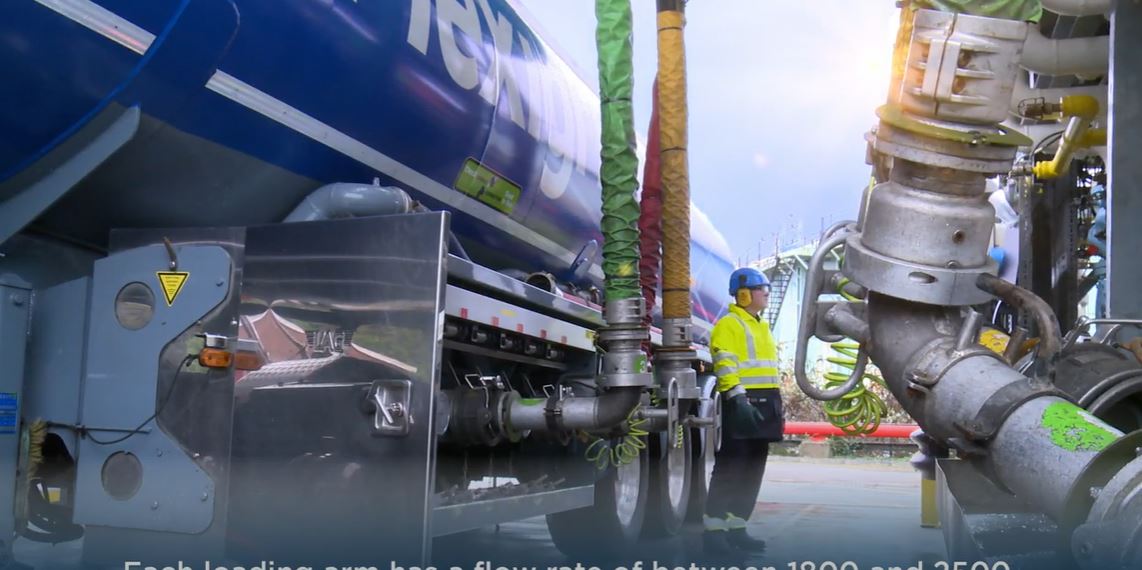
Photograph 3: Tanker Filling, connections

5.      Could short pneumatic coupling connections be used, to prevent tanker movement?

(1)   For example, a 1.5 metre hose, that could be stretched out, linked to trip system

(2)   Can it work for a manifold system, with multiple connections at distances away?

(3)   Would you need multiple specifications for these hoses for different types of tankers?

(4)   Where would it connect on the tanker? Rear or the centre?

(5)   Also account for different specs on the outlet on the vehicle

(6)   Would it require regular inspection?

(7)   Could the hose easily melt if it were ignited somehow?


Thank you for reading, please comment, like and subscribe to this blog

Hope you have enjoyed reading this

Chiraq


Saturday, March 20, 2021

HAZOP of a Powder Mixer unit – Rhetorical Questions

Hi everyone, I would like to share some quick questions and notes, I made during a HAZOP (Hazard Operability) safety study for a reactor producing chemicals for the agriculture industry.

Powders and liquids are handled in a mixing process, that consists of a bag tipping station, transfer conveyors, a ribbon mixer, liquid drum pumping system, a product collection container and an extraction system.

Like my other posts, questions here can be asked for any generic process plants.

Please comment, like and subscribe.

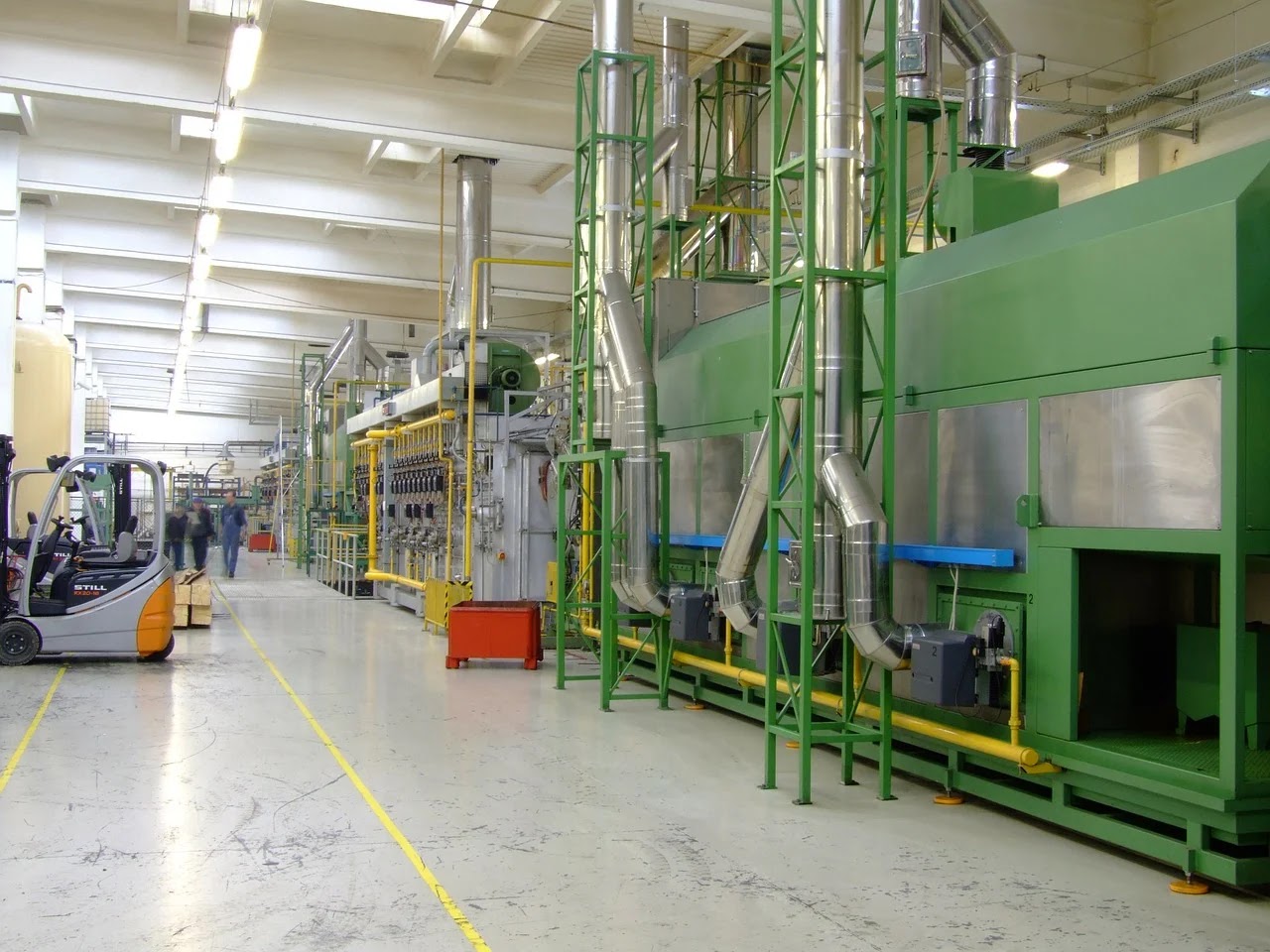
Photograph 1: Generic Production Plant

Powder handling system:

1.       Does a high flow rate of powder through an insulating discharge hose cause the potential for propagating brush discharges?

(1)    Is there a potential for an explosion to occur?

(2)    Could you install earthing reinforced wires into the discharge hose (coils)?

(3)    BUT ironically, earthing an insulting hose, can actually create the potential for propagating brush, therefore it is better to use static dissipative hoses

(4)    Could you use an orifice plate to slow down the powder flow at the discharge?


2.       For the extraction for the bag tip station - Is there an alarm for low flow, due to a blocked filter?

(1)    Could you install a simple (more practical) ribbon hanging down on the bag tip station? - this is to show air flow is operating correctly?

(2)    This is an alternative to differential pressure gauge!

(3)    Is there a precheck of the filters before each batch operation? is an inspection regime needed?


3.       If the extraction fan is not ATEX rated, and there is a single layer filter, could you install another ‘pre-filter’ cartridge on the suction line, to stop flammable atmospheres entering into the unsuitable filter & extraction fan?

Photograph 2: Generic Dust Collector

4.    If a knife is dropped into tipping station can this cause sparks? Could you make the knife tied to station or make the knife too big for it to pass by the mesh?      


Liquid Transfer System:

5.       Can the liquid containers be warmed to make pumping easier?

(1)    Check material properties for issues first

(2)    Can the liquid cool and crystallise?

(3)    If this is an issue, could you install a temperature alarm for the room as well? This is because the external container body or transfer pipes will usually freeze before the liquid inside does.


6.       Is there a potential for the air pumps to leaks? - Can you enclose the pump station with protections against splashes?


Mixer unit

7.       Can the inspection hatch of the mixer, be left open when the mixer is running?

(1)    Dust can be let out and accumulate at high levels, thus become a secondary dust explosion risk

(2)    Could you install a timer to shut the mixer when the hatch is open or after set period of time?


8.       Can the couplings between the agitator shaft and motor become disconnected during operation?

(1)    Can you put dot of paint on non-driven end of shaft and check if it is moving?

(2)    If it is a noisy operation, then this may not be required


Photograph 3: Generic Mixer Vessel


9.       Could a wrong collection bag on the mixer discharge outlet, overfill?

(1)    Could you link the weigh scale underneath the collection bag, to automatically shut the mixer discharge valve?

(2)    Ensure this discharge valve shuts close upon loss of power as well.

(3)    Ensure material packed are no less dense than water – so 1 tonne is a collection bag is full or less, but never more


10.   Is there a safe method of cleaning the mixer unit? Is a confined space entry permit needed?


Thank you for reading, please comment, like and subscribe to this blog

Hope you have enjoyed reading this

Chiraq


#HAZOP #ProcessSafety 


Monday, February 1, 2021

HAZOP of a Metal Powder Production Plant – Rhetorical Questions


Hi everyone, I would like to share some engineering questions and notes, I made during a HAZOP (Hazard Operability) safety study for a vacuum furnace process producing fine metal powder.

The melting and spray drying of metal blocks into fine powder (extremely explosible!) is undertaken in a vacuum furnace vessel. The process includes furnace tipping of melted metal blocks, spray drying with a gas, solid separation via a cyclone and dust filter/gas cleaning before it releases to the atmosphere. A new metal feedstock and impure inert gas was considered in the study.

Like my other posts, questions here can be asked for any generic process plants.

Please comment, like and subscribe.

Photograph 1: Generic Metal Production Plant

Vacuum Furnace Operation

1.       Given water is usually circulated in coiled pipe on the furnace body – if a leak were to occur, is there a possibility of steam explosion occurring?

(1)    Condensation – possibly due to a leak in the vessel roof

(2)    Water droplets in presence of rust/coal/soot and molten metal, can lead to an explosion

(3)    Caused by violent boiling or flashing of water into steam


2.       If a wrong feedstock (metal block) is used, Is there any possible consequence of superheating?

(1)    Thermal expansion – may lead to possible rupture and leaks

(2)    Low density material can lead to overfilling – as higher volume for same mass

(3)    Different vapour pressure between boiled vapour of new material – boiling point reduced in mixture – thus over boiling?


3.       For the dust vent filter box – is it possible that it could be incorrectly installed?  

(1)    Could the vent panels or dust collection bin on the filter, not be secured?

(2)    Could you consider installing a dust discharge monitor in the vent stack?

(3)    Do explosion panels need to account for travel back – therefore do they have an explosion isolation system? like a Slam shut valves, deluge/suppression, trouser legs (to push explosion up - I know it’s a funny word actually)

Photograph 2: Generic pipework

 
Oxygen sampling

4.       The spray drying of flammable metal powders, is inerted, based on its limited oxygen concentration (LOC) - to prevent explosive atmosphere. There is an oxygen monitor and alarm with a set point to trip operations - Has this been adjusted for operating temperature and pressure of the furnace?

(1)    Has a safety margin been applied to the set point of the oxygen O2 alarm?

(2)    Typically, the LOC is reduced by 17% reduced per 100°C up to 200°C, then 12% reduced per 100°C afterwards

(3)    Include an extra 2% points extra margin for delay in reading! This is concentration NOT percentage of an LOC (very important!!!)


5.       Has the complexity of temperature been accounted for the monitoring of oxygen level in the furnace? Has a profile been developed as the furnace vessel is being cooled?:

(1)    Heated inert gas could be heavier than air, but at temperature could be at point of buoyancy

(2)    It is recommended to record an oxygen monitoring profile for shutdown/cooling

(3)    Can you use a thermal temperature monitor to see inert gas profile?

(4)    BUT convection pattern of hot gas can be inert mixture – may be cooled thus difficult to tell if air or inert gas present.


6.       How do you check if sample line for an oxygen analyser is blocked? Is there a cycling of multiple channel sample points?

(1)    Could it be drawing from one channel and others are blocked?

(2)    Calibration not enough to fix sample line problems!

(3)    Can you use secondary handheld meters (2nd layer)

(4)    Can you reverse the flow of sample line to unblock line (purge)?

(5)    Is there a redundancy present (spare?)

(6)    Is there motive force (pressure) or a pump needed?

(7)    Is there a place to return the sample? E.g. vent stack or flare, if hazardous


Inert Gas Supply / Storage


7.       Are there any cold surfaces in supply line for gas to expand? – may cause injury to person by freeze burning


8.       Is the inert gas dry? – thus potential for condensation & blockages in supply line to vessel


9.       Is there potential for air ingress into the gas supply line or in the vapour space of the storage tank - when supply level is low?

(1)    Is there a monitor of oxygen gas to check quality of inert gas quality.

(2)    Has a walk the supply pipework been undertaken as per its P&ID?

(3)    Safeguard may be that air is expected to be above the liquid CO2 surface (as CO2 is heavier)

(4)    Get vendor to do a hard change over & written confirmation of the inert gas sample

(5)    Partial pressures – if CO2 or O2 which will boil off first? – therefore is there a limit switch when the supply storage tank empties?

Photograph 3: Generic Factory Floor

General / Maintenance:

10.   What if there is a power failure of a hydraulic crane unit used in tipping the furnace into the spray dryer?

(1)    Does it lock in position upon failure? (continuous strain)

(2)    Does it return to default position in slow mode (or nearest point?)

(3)    Hydraulic system will need something to relief pressure for it to stop dead

(4)    What is the fail-safe position of the hydraulic/electrically powered crane?


11.   Hydraulic oil hoses used in the mechanical systems, what are the quality checks, change policy and service life?

(1)    Are replacements like for like or better hose service duty

(2)    Can additives be used to prolong life of such hoses?

(3)    Is there a potential for fire in area and injury to person?

(4)    If left unchecked too long – may crack and degrade


12.   Are solvents used to clean the vacuum furnace vessel?

(1)    What respirator kits are used? Disposable? Tyvek (paper suit)?

(2)    Can water be used for cleaning? Deionised v distilled water (pure water)

(3)    Mixed bed resin is used for deionised (pass through)

(4)    Ensure ions have been removed – thus relatively fast process

(5)    But needs regeneration of resins that may degrade over time

(6)    Distillation – removal of contaminants but longer process

(7)    Consider waste water collection in bund area & disposal (HSE)

(8)    BUT water too cohesive – thus effects vacuuming process


Thank you for reading, please comment, like and subscribe to this blog

Hope you have enjoyed reading this

Chiraq


#Hazop #Safety #IChemE #PHA

HAZOP of a Furnace

Hi everyone, I would like to share some notes and questions I made during a HAZOP (Hazard Operability) safety study for a natural gas fire...