Sunday, October 9, 2022

Equipment Risk Assessment for ATEX Compliance - Some thoughts

Hi everyone, I would like to share some notes and questions on certifying non electrical equipment in hazardous areas using the methods outlined by the ISO standard - 80079-36 & 37.

This is used to self-certify legacy equipment as ‘safe’, and is significantly cheaper than buying expensive ATEX rated equipment! having saved 10s of thousands of £££s in the many project I’ve worked on.  


Figure 1: Generic mechanical equipment

Typically a risk assessment table is filled out, with example scenarios on how an ignition source can occur, its safety system in place, giving a resulting equipment protection level (EPL) (hazardous zone). Improvements to the safety guards like maintenance procedures, monitoring system, etc, may also be given as a result to achieve compliance.

Figure 2: Risk assesment table example from ISO 80079-36

 The following are some questions when undertaking this assessment. 

Please comment, like and subscribe...


Photograph 1: Generic pump opened up showing shaft and flanges
Pump system:

1.      Can there be frictional heating of impeller mechanical seals between rotating shaft in stationary outer part? - May not be likely as this part will be immersed and cooled with process fluid


2.      Can faulty bearings go undetected for some time – leading to the motor cooling fan blades hitting the cowling?  (applicable to other rotary equipment like conveyors and fans, etc.)

(1)   Can unchecked faulty bearings now be considered to be run in ‘normal operation’ ?

(2)   Are the bearings replaced at regular intervals, regardless of condition? See a typical bearing failure bath tub curve


Figure 3: Typical bath tube curve for bearings

3.      For the pump lubrication oil system:

(1)   Is there an alarm present if there is a leak on the liquid seals?

(2)   Are the seals monitored for flow out or pressure inside?

(3)   Is there any consequence for incorrect type of lubrication oil used for the pump?

(4)   Is there any issues for using contaminated or degraded oil? E.g. static discharges into a gas zone?

(5)   Is under and over lubrication an issue?


4.      Is there a limit on the amount of insulting surfaces inside the pump?

(1)   This is to prevent brush discharges, e.g. during cleaning operations, plastic parts can be rubbed to clean them, leading to brush discharges

(2)   There should be a limit of insulating surfaces depending on gas group, as per IEC 60079-32, e.g. 5,000 mm2 for IIA, 2,500 mm2 for IIB, etc.


5.      Typical Safeguards:

(1)   For the Planned Preventative Maintenance (PPM) routines:

                                          i.     Is there a check, lubrication and greasing of bearings periodically?

                                         ii.     Is there a visual check for faulty bearings?

                                        iii.     Are regular thermography undertaken on motor/equipment?

(2)   Are approved seals used & maintained in accordance with the manufacturers’ instructions?

(3)   Can you have the pump’s amperage sensor on the motor and link it to an alarm and trip? Is this an adequate safeguard for abnormal operation, overheating, etc?

(4)   For ‘Ex’ rated motors – are the flange gaps for ‘Ex d’ flameproof enclosures ensured that it is not painted over or otherwise blocked (as this may compromise sealing)?


Figure 4: Thermal imaging of pump motor

Screw conveyor:

1.      Can trapped powders within mechanical seals become heated to ignition temperature?

2.      Is the bending of screw or main shaft by powder weight credible?

3.      For tramp metal – is there filter/screening quality control process? Is rusting credible?

4.      Is charge accumulation on screw conveyor body by powder movement possible?

(1)   Can there already be charge on feed powders?

(2)   Infeed powder may generate static or inherently have static charges present (charge relaxation time)

(3)   Are the powders fed from earthed bodies/locations?

(4)   What is the powder resistivity? – typically high for organic powders like flour – difficult to charge.


Figure 5: Generic screw conveyor componants

5.      Safeguards (some similar to the pump system)

(1)   Is there a check for trapped powders around rotating seals?

(2)   Is the equipment run in short duration batches? This may allow a degree of cooling

(3)   Is the running rotational speed expected to be slow?

(4)   Is there checks for rusting?

(5)   Is there clearance inherent in the design of motor fan? Maybe this has changed over time due to rust or deposited/built up layers?

(6)   Is the shaft welded or screwed in? is the screw strength/torque checked as part of PPM?

Figure 6: Screw conveyor shaft failure


Reactor Agitator:

1.      Is rotating the shaft in the wrong direction an issue?

2.      Can a failed agitator or malfunction cause a chemical reaction runway potential? Is there any safeguards like process control or operating procedures of this?

3.      Drive system issues:

(1)   Is misalignment of agitator drive possible? This is usually the cause for increased load bearings, gears and seal damage

(2)   Has the agitator installation been verified using laser alignment and by a competent engineer?

(3)   Does the agitator drive belt need to be anti-static?

(4)   Is there a pressure testing system on the vessels prior to starting a new batch – to check for faulty/leaky bearings?


Figure 7: Generic reactor agitator

Thank you for reading, please comment, like and subscribe to this blog

Hope you have enjoyed reading this

Chiraq


Sunday, May 8, 2022

Reaction Runaway Hazards – Some thoughts…

 Hi everyone, 

I would like to share some brief notes I have made from my experiences in assessing Chemical Reaction Hazards (CRH) typically in HAZOP studies and designing relief systems.

These notes are brief and hopefully easy to digest.

Please comment, like and subscribe.


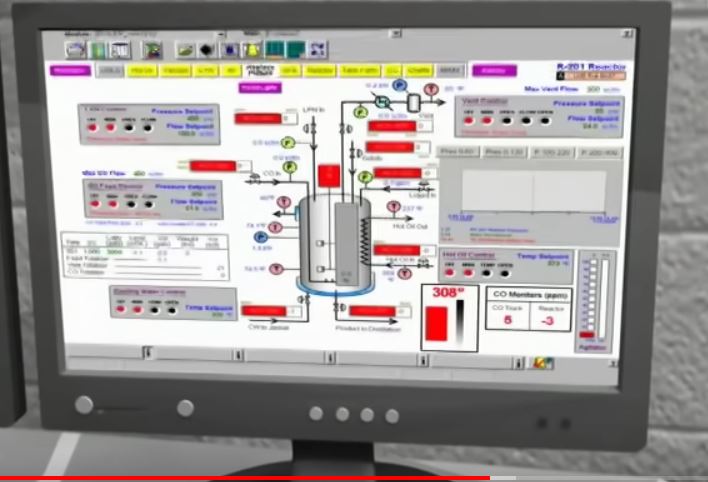
Figure 1 - Typical Control System DCS for a reactor

 1.      There are 3 main types of reactivity hazards:

(1)   Self-reactive (polymerisation, decomposing & rearranging types)

(2)   Reactive with substances (e.g. air, water, etc)

(3)   Incompatible materials

 2.      Complexities to consider in relief system design for thermal runaways (Chemical Reaction Hazards):

(1)   Reaction rate varies exponentially with temperature

(2)   Exothermic heat releases vary with time

(3)   Volatile and non-condensable gas can be generated (decomposition)

(4)   Composition change affects boiling point curve

(5)   Viscosity increases due to polymerisation


3.      Heat generation from a runaway reaction proportional to volume (mass), but heat removal is proportional to the surface area

(1)   Elevated temperatures may also initiate secondary side reaction which is more rapid or energetic

(2)   The speed of reaction does not change the potential energy released, a slower reactions may allow unreacted material to accumulate


4.      Onset temperature for a reaction runaway is not an intrinsic property of the material reactants

(1)   DO NOT treat it as an absolute value

(2)   As onset temperature depends on test taken and safety margin – VERY IMPORTANT


Figure 2 - Generic reactor vessel heating up

 5.      Colder reactions are not always safer than faster hotter reactions

(1)   Accumulations can form and higher concentrations/amounts can react suddenly/unexpectedly even at colder temperatures.  

(2)   Thus restarting a failed stirrer can be very dangerous in this situation

(3)   Stirrer malfunctions or restarting of stirrer is very common cause of a CRH incidents.


6.      Chemical reactions that remove gases from the head space of a tank can cause a vacuum! – Make sure your vessel/reactor is designed for vacuum.


7.      For storage of hazardous material - Risk is proportional to the size of the system components: e.g. number of valves, nozzles and lines on storage tank (e.g. leak points):

 (1)   Small storage vessels are usually deliberately overdesigned, than having one large vessel (which are more economical).

(2)   But large connecting lines can also leak in a large storage tanks – thus bigger risk.

(3)   This is an interesting trade off, especially with the supply chain issues in the world


8.      Rupture disc alone should not be used on a tank with toxic material as they do not close after opening – and can lead to a continuous release into the area (risk people, assets and environment?)


Thank you for reading, please comment, like and subscribe to this blog

Hope you have enjoyed reading this

Chiraq
Saturday, August 14, 2021

HAZOP - Ammonia Refrigeration Plant - Rhetorical Questions


Hi everyone, I would like to share some notes and questions I made during a HAZOP (Hazard Operability) safety study of an Ammonia Refrigeration Plant Room.

Ammonia is used to chill water in a heat exchanger system. The system consist of compressors, chillers, heat exchangers, liquid receiver vessels, gas detection, etc. 

Like my other posts, questions here can be asked for any generic process plants.

Please comment, like and subscribe.

Photograph 1: Generic refrigeration pipework

1.      Is there mandatory gas monitor (RPE) requirements for personnel entering the plant room?

(1)   Is there signage requiring gas monitors present?

(2)   Is it included in contractor rules / induction?

(3)   Can a radio system be used to inform a person the actual ammonia concentration prior to entering in the room?

(4)   Are isolation valves readily visible, operatable and indicated on a P&IDs, and on display on the wall of the room?


2.      Inadequate isolation procedures - Is there double isolation on maintenance lines handling ammonia?

(1)   Can you consider relying on double isolation of charging of ammonia

(2)   This should stop the plant but does not remove the ammonia system – e.g. compressors, evaporators and condensers

(3)   Or is complete removal of ammonia needed? e.g. from liquid receivers and/or spray chillers


3.      Can a leak in ammonia cause lighting to be switched off by alarm activation at high level?

(1)   Can you consider temporary solution of leaving access door open when someone is in ammonia room?

(2)   Is there painted hand rail/floor as guide to emergency exit?


4.      Is there any fire extinguishers in ammonia plant room? - This should be removed as temptation to tackle fire may expose an operator to toxic ammonia releases


5.      Can you have extract fans running permanently at low speeds – so they are ready to start when required? E.g. activation from a gas detector, etc.


Photograph 2: Extraction fan in ammonia plant room

Chiller & evaporator system:

6.      Is there any consequence for ammonia leaking into water tubes of a chiller system?

(1)   Alkaline water in chilling process…

(2)   Mixing usually creates a vacuum – Is chiller vessel rated for full vacuum?

(3)   Sampling taken by lab technician and potential exposure?


7.      Is failure of electrical trace heating an issue?

(1)   Lack of heating oil and oil cools, thus ammonia is not evaporated efficiently

(2)   Could you install stick-on digital temperature indicators? to put on to the vessel

(3)   Include checking as part of daily walk through by operator


8.      Are heat exchangers subject to the statutory inspection under the Pressure System Safety Regulations (PSSR)? If so then undertake inspection and implement the findings

Photograph 3: Generic compressors for ammonia circulation

Compressor

9.      For the compressor outlet valve, can you cap the valve stem, as a safeguard? Therefore only tools would be required to close valve – thus prevent inadvertent closing of the valve.


10.   Does a failure in oil heater element, due to high temperature trip - have a ‘fail off’ or ‘fail on’ mode? Could the oil heater stay on, in a failure mode (high temperature)?


11.   Can the lube oil separator fail on start-up – leading to low temperature? Is there automated shut off system and manual daily oil level checks undertaken for this?


Pressure relief

12.   Can you add a manifold (multiple) of the pressure relief valve lines? Should there be separate lines to atmosphere? (for multiple PSVs)?


13.   Can you install a sight glass after a pressure relief valve – if it is blocked or fails to open?


Thank you for reading, please comment, like and subscribe to this blog

Hope you have enjoyed reading this

Chiraq


Thursday, June 17, 2021

HAZOP of Gas Turbine – Rhetorical Questions

Hi everyone, I would like to share some notes and questions I made during a HAZOP (Hazard Operability) safety study for a gas turbine unit.

The gas turbine has separate systems for the fuel gas & oil, lubrication oil and a turbine washing section that was considered during the study.  

Like my other posts, questions here can be asked for any generic process plants.

Please comment, like and subscribe.

Photograph 1: Generic power plant station

1.      For high temperature feed gas into the burner - Can the blades of the turbine damage due to heat cycling of high temperature?

(1)   Can the blade shed, leading to mechanical sparking downstream, if possible?

(2)   Is there exhaust temperature thermocouple, monitoring, alarm and heat detectors externally?

(3)   Can loss of multiple thermocouples in an inter-stage, fool the control system into thinking a deviation has occurred? E.g. Spurious shutdown


2.      Can the drain valve of the turbine enclosure fail to close upon start up?

(1)   Potential for combustion gases to enter turbine house, cause asphyxiation, hot gases & flammable atmospheres

(2)   Unfiltered air could also be drawn into the turbine enclosure, via open drain

(3)   There will be natural forced air external of enclosure to dilute potential leaks via the drains


3.      Does the flame detection within the turbine enclosure detect both oil and gas fires?

(1)   Is there emergency procedures for an external fire to a fuel oil pump line & tank system?

(2)   Can you install a remote / automatic isolation valve to the gas oil tanks that isolates the tanks during a fire scenario?


4.      Can fuel oil carry over into the feed fuel gas line?

(1)   Oil can enter gas burner – carbonise and potential to block burners & possible loss of power

(2)   Is there a demister (knock out KO :) vessel?


Photograph 2: Generic Fuel gas separator KO vessels

5.      Can the float valve on the gas demister fail open?, thus gas enters the liquid tank & sump

(1)   Is there annual maintenance on the float valve (safeguard)

(2)   Is a review of the drainage arrange of gas demisters needed to prevent it contaminating the drains?

(3)   To prevent gas ingress – is there leak testing prior to start up?


6.      Combustion air inlet - Can the air filter block due to icing? Thus potential carry over of debris into the turbine.


7.      Can vehicles strike and ruptured gas pipes? Is there a vehicle protection systems for gas/oil lines?

Figure 1: Schematic of turbine with lube oil system


8.      Can the waste heat boiler exhaust dampeners fail close?

(1)   This can cause blockages of exhaust – leading to high pressures

(2)   Is there duct pressure monitoring, alarm and trips?

(3)   Could you have mechanical coupling on dampeners to prevent both closing at the same time


9.      Can the diverter valve returning lube oil line into the heat, fail close and heater remain on?

(1)   High temperature can degrade the lubrication properties of the oil and thus cause bearing and turbine damage?

(2)   If lube oil was inadvertently cooled in the cooler - Oil viscosity increases if cooled, and reduces efficiency of the lubrication

(3)   Is there immersion heaters within the lube oil coolers?


10.   Lube oil filling – could the wrong oil be filled? Is the correct oil drum kept nearby on a spill pallet & spill kit?


11.   Can the fuel oil nozzle within the burner fall off? Is it constructed to minimise such failures?


12.   For turbine washing - Can you overheating the wash fluid on cold days, change properties of fluid such that splashing during filling could occur? Thus potential burns to operators


Thank you for reading, please comment, like and subscribe to this blog

Hope you have enjoyed reading this

Chiraq

HAZOP of a Furnace

Hi everyone, I would like to share some notes and questions I made during a HAZOP (Hazard Operability) safety study for a natural gas fire...